SUNY Online Teaching Ambassador 2026: Monroe – Amy Burtner
Monroe Community College
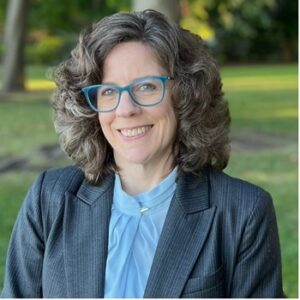
Dr. Amy L. Burtner is a Professor in the English & Philosophy Department at Monroe Community College.
“After graduating from college as a double-major in philosophy and English, I began my graduate studies in the Philosophy, Literature, and the Theory of Criticism program at Binghamton University, where I earned an M.A. in philosophy, and a Ph.D. in comparative literature. From 1998-2008, I was an adjunct/non-tenure track instructor in the English department at SUNY Cortland. Since 2008, I’ve been a full-time professor in the department of English and Philosophy at Monroe Community College, teaching courses in both disciplines of my department. As of 2022, I’ve been teaching solely on the philosophy side. I live in the South Wedge neighborhood of Rochester with my spouse Laurie, a cat named Henry David, and a terrier-beagle named Bert. Some of my interests and hobbies include gardening, reading, and taking long naps.
My first steps in online learning were in May 2003 at SUNY Cortland, when I took part in a training workshop on using WebCT. After dabbling with “web-enhancement” of my courses for a year, I taught my first fully asynchronous course in the summer of 2005, and my creative energies in online teaching were sparked with a passion that has not waned. I brought that energy with me to MCC, where I’ve taught 1-2 SLN courses each semester as part of my full-time load.
Over the years I’ve witnessed a lot of changes, both in technology (from WebCT to Angel to Blackboard to Brightspace) and with prevailing attitudes about online teaching and learning. The latter have certainly been affected by the pandemic and rise of AI. I’ve also noticed my own pedagogical interests changing over the years, from skills-based, multi-modal writing instruction to a more human-centered approach that emphasizes connection and the collaborative nature of learning and meaning-making. I like to think that my online courses reflect those values, with learning activities that include social annotation of texts, collaborative whiteboards and concept-mapping, and roundtable discussion projects.
Because of my previous experience and comfort with online teaching, I was in a better position than many faculty during the pandemic, so I spent a lot of time in those early months assisting colleagues with technology- and pedagogy-related support. Most recently, I’m serving as a Department Accessibility Liaison, as the April 2026 deadline nears for ADA-compliance of online materials under the Title II Digital Content Accessibility policy.
I’ve never been interested in debates that offer zero-sum takes about online vs. face-to-face learning. The motive of such debates is usually to present face-to-face as inherently better than online. But that’s too simplistic. Both forms of teaching and learning can go really well, really badly, or some combination in between. Too much depends on factors beyond mere modality. It’s a given that online teaching and learning are not for everyone, so it matters that students and faculty know whether it is for them or not, and why. I knew early on it was for me.”